How to Check Uttarakhand Land Records?
Learn how to check Uttarakhand land records online through the official Bhulekh portal using the owner's name, khasra number or khata number.
On this page+
You can check Uttarakhand land records online, free, on the state's Bhulekh portal in a matter of minutes. That one habit is the cheapest insurance a buyer can get. It tells you who really holds the land, how much of it there is, and whether the person selling it is the person named on the record.
The record you are after is the khatauni, the Record of Rights that the revenue department keeps for every parcel in the state. This guide walks you through the online check step by step, the owner-name search included, and the warning signs to watch for before you pay.
What Are Uttarakhand Land Records?
A land record is the government's answer to a simple question: who holds this piece of land, and what kind of land is it?
In Uttarakhand, the main document is the khatauni, also called the Record of Rights. It lists the owner's name, the khasra or gata number of the parcel, the area, and the land type, whether it is farmland, residential, or something else.
The state revenue department maintains these records and puts them online through the Bhulekh Uttarakhand portal. Because the record is public, any buyer can read it without a broker, a bribe, or a trip to the tehsil office. So the first move in any land deal is to pull the record and read it yourself.
How to Check Uttarakhand Land Records Online
The whole check runs on the Bhulekh Uttarakhand portal. Here is the process, one step at a time.
Step 1: Open the Bhulekh Uttarakhand Portal
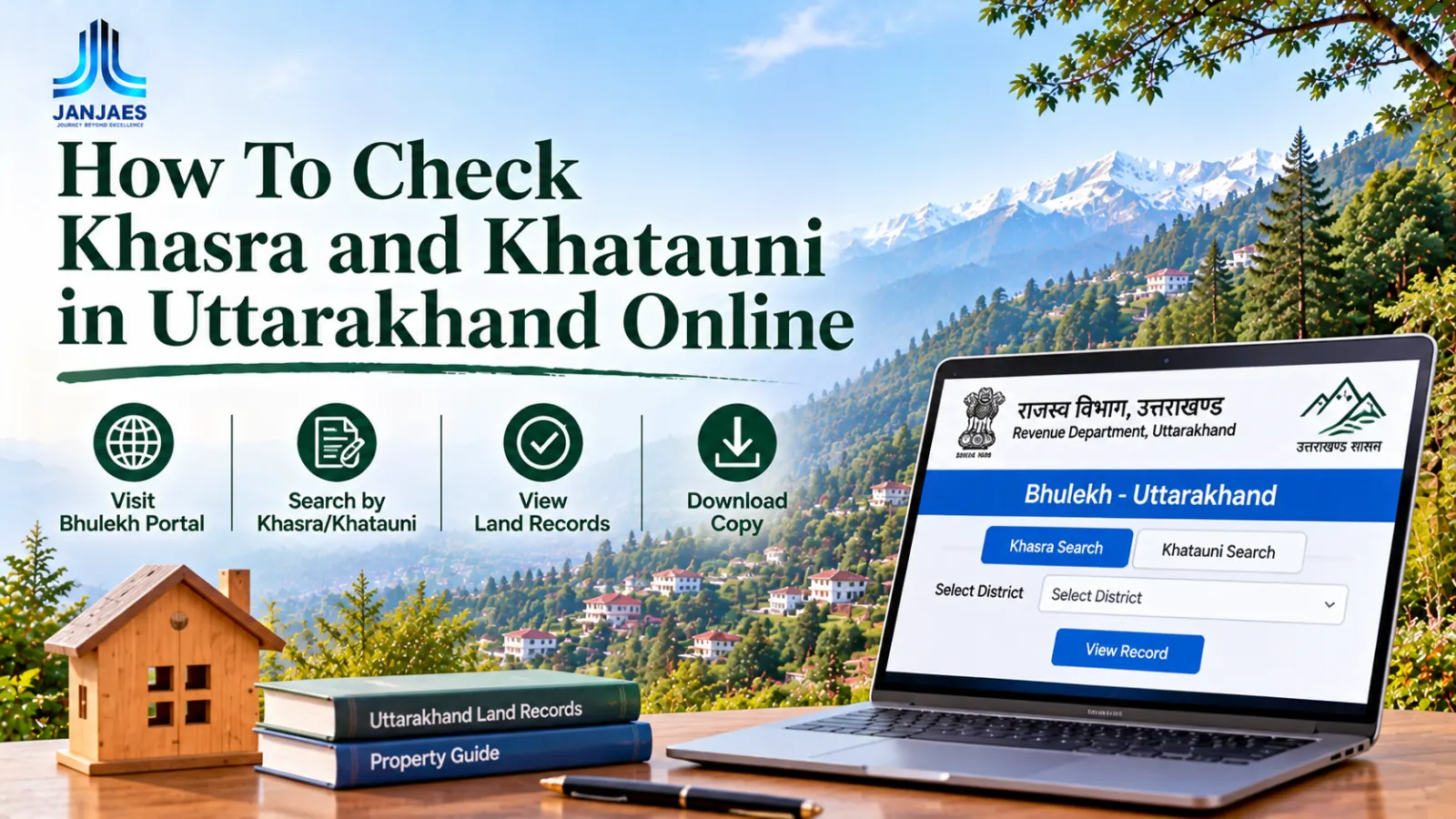
Go to bhulekh.uk.gov.in and open the public Record of Rights section. This is the official site of the Uttarakhand revenue department, so avoid the copycat pages that ask for a fee. The real portal charges nothing to view a record.
Step 2: Select the District, Tehsil and Village
The site asks you to narrow down the location before it shows any record. Pick your district first, then the tehsil, then the village where the plot sits. Get the village right. A parcel in the wrong village returns the wrong khatauni, and that slip is how buyers end up reading someone else's land.
Step 3: Search by Khasra, Khata or Owner Name
Once the village loads, the portal gives you a handful of ways to search:
- By khasra or gata number, if you have the plot's number from the seller's papers.
- By khata number, the account number that groups a holder's parcels.
- By owner's name, when the name is what the seller has given you.
The owner-name route is the handy one when the seller has given you little on paper. More on that search in a moment.
Step 4: Open and Read the Record
Select the parcel and the khatauni opens on screen. Read the holder's name, the area, the land type, and the khasra number. This is your Uttarakhand land registry record, the single sheet that tells you what you are actually buying. You can save or print it for your lawyer to read in full.
That is the core check. The owner-name search deserves a closer look, because it is the one buyers lean on hardest.
How to Check Uttarakhand Land Records Online by Name
If you want to check Uttarakhand land records online by name, Bhulekh has you covered.
On the search screen, after you pick the district, tehsil and village, choose the search-by-name option and type the owner's name as it appears on earlier papers.
A name search is the fast way to confirm one thing: that the person selling the land is the person the government records as its holder. When the name on the record matches your seller, you are on solid ground. When it does not, you stop there and ask why, because a seller who is not on the record has nothing to sell you. Spell the name exactly as the old documents do, since one wrong letter can send the land registry search back empty.
What the Land Record Shows You
Reading the khatauni is only useful if you know what each line means. Four details carry the real weight:
- Owner's name. The holder the state recognises. It has to match your seller.
- Khasra or gata number. The unique ID of the parcel, which should match the number in the sale papers.
- Area. The size of the holding. Check it against what the seller claims you are buying.
- Land type. Whether the parcel is recorded as agricultural, residential, or other. This one decides what you can build.
The land type is where plot buyers get caught. A lot of low-priced land on sale in the hills is agricultural on paper, and you cannot build a home on farm land until its use is changed. Our guide to Section 143 in Uttarakhand explains that conversion in full.
What to Check Before You Buy
The record tells a story, and a line or two in it should make you slow down. Run through these before any booking amount leaves your hand:
- Name mismatch. The owner on the record is not the person selling to you. Treat this as a full stop, not a detail to fix later.
- Wrong land type. The parcel reads as agricultural when you were sold a home plot.
- Area gap. The area on the record is smaller than the plot you were shown on site.
- Stale record. The record still names an earlier owner, which means a past sale was never mutated.
That last point matters after you buy, too. Once a sale goes through, the record has to be updated into your name, a process our guide to Dakhil Kharij in Uttarakhand covers in detail. If the parcel is part of a builder's project, pair the record check with our guide on who can buy land in Uttarakhand to confirm you are even eligible.
What to Keep Ready Before You Search
The check goes faster when the details sit in front of you. Keep these on hand:
- The village, tehsil and district of the plot
- The khasra, gata or khata number, if the seller has shared it
- The owner's name, spelled as it is on earlier papers
No luck online? The village patwari or the local tehsil office holds the same records offline and can give you a certified copy for a modest fee.
How a Clean Record Saves You the Legwork
Here is the quiet advantage of buying from a documented developer: the record check is already done. The title is settled, the land use is in order, and the khatauni names the builder, not a chain of sellers you have to trace.
That is the standard Janjaes Infra builds to. Its Privemont villas near Jim Corbett stand on freehold residential land, with the records and approvals set out before sale, so the land type and the owner name both read exactly as they should. Look over the homes on the Uttarakhand projects page, or ask the Janjaes Infra team to show you the record for a specific villa before you commit.
Frequently asked questions
How do I check land records in Uttarakhand online?+
Open the Bhulekh Uttarakhand portal at bhulekh.uk.gov.in, go to the Record of Rights section, select the district, tehsil and village, and search by khasra number, khata number or owner name. Open the record to read the holder's name, area and land type.
Can I search land records by name in Uttarakhand?+
Yes. On the Bhulekh portal, after you select the district, tehsil and village, choose the search-by-name option and enter the owner's name to pull up their khatauni for that village.
What is a khatauni in Uttarakhand?+
The khatauni is the Record of Rights, the main land record kept by the revenue department. It names the holder and lists the parcel's khasra number, area and land type.
Is it free to check land records on Bhulekh Uttarakhand?+
Yes. Viewing a record on the official Bhulekh portal costs nothing. Only a certified copy from the tehsil office carries a nominal fee, so avoid any site that charges you just to look.