How To Check Khasra and Khatauni in Uttarakhand Online
On this page+
You can run the khasra khatauni online check in Uttarakhand, meaning Uttarakhand, for free on the state's Bhulekh portal in about five minutes. The khasra is the number of a single plot. The khatauni is the record that names who owns it. Read both before you pay a rupee, and you'll catch the trouble that costs buyers lakhs later.
This guide shows you the exact path on the Bhulekh Uttarakhand portal, step by step, what the record tells you, and the difference between the free copy you see on screen and the certified one you may need later. Let us start with the two words themselves.
This is general information, not legal advice. Portal menus change, so confirm the latest steps on the official site and have a lawyer read anything you rely on.
What Are Khasra and Khatauni?
Think of them as two halves of the same land record, one for the plot and one for the owner.
- Khasra. The survey number of a single plot, given during the land survey. It carries the plot's area and whether the land is irrigated or not.
- Khatauni. The Record of Rights for a village. It is the ownership ledger, listing the holder, the father's name, every plot they hold, and their share in any joint land.
- Khata. The account number inside the khatauni that groups every plot a single owner holds.
You will also see the khatauni written as khatoni, the two spellings mean the same record. Together, the Khasra and Khatauni land records answer the only two questions that matter in a land deal: what is this plot, and who really owns it. Now to pulling them up.
How To Check Khasra and Khatauni in Uttarakhand Online
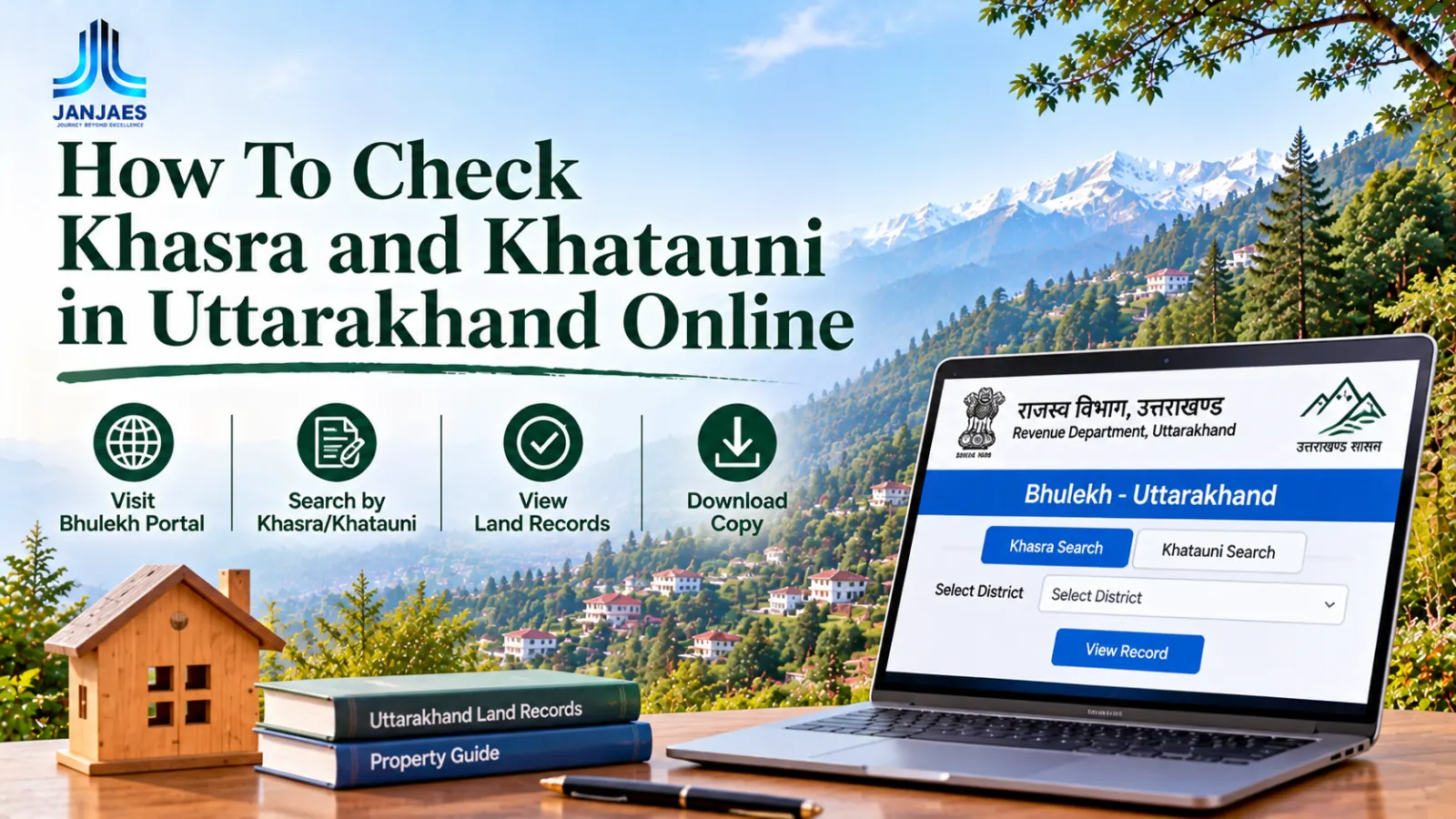
The whole check runs on the official Bhulekh portal. Here is the process, one step at a time.
Step 1: Open the Bhulekh Uttarakhand Portal
Type bhulekh.uk.gov.in into your browser and open the site. This is the Devbhoomi land records service run by the Uttarakhand revenue department, and it works the same on a phone or a laptop. Type the address yourself rather than clicking a stray link, because copycat sites charge you for a record the real portal gives free.
Step 2: Click Public RoR and Pick the Location
On the homepage, click Public RoR, the record of rights. The site then asks you to narrow down the place. Select your district, then the tehsil, then the village. A fiscal year dropdown shows up once you pick the village. Get the village right, since a parcel in the wrong one pulls up someone else's land.
Step 3: Choose Your Search Method
Now the portal gives you three ways to find the parcel:
- By Khasra or Gata number, if the seller has shared the plot number.
- By account (khata) number, which sits on the khatauni itself.
- By owner's name, when you have neither number in hand.
Pick the one that fits what you hold, and run the search. The name search is the fallback buyers reach for when the seller has handed over little on paper.
Step 4: Open, Read and Download the Record
Select the parcel and the record opens on screen. Read the owner's name, the khasra number, the area, and the land type. Then use Download or Print to save it as a PDF for your lawyer. That is the khasra khatauni online check UK buyers can run from their own phone, no broker and no fee.
One thing about that downloaded copy is worth knowing before you lean on it.
Online Copy vs Certified Copy for Land Records
The record you download for free carries a stamp that says "Unverified Copy." It is perfect for a first look, a price talk, or a quick check that the seller's name matches. For anything official, though, it does not stand on its own.
When you need the record for a bank loan, a court case, or the sale itself, you want a certified copy. That comes from the tehsil office, at a modest prescribed fee of around ₹15 a page, and tehsils increasingly take the request and payment online as well. So treat the free copy as your due-diligence tool and the certified copy as the legal one.
What the Khasra and Khatauni Record Shows
Reading the record is only useful when you know what each line means. The entry carries:
- Owner's name and father's name, the holder the state recognises.
- Khata number and every khasra number tied to that owner.
- Area of each plot, to check against what the seller claims.
- Land type, whether the parcel is private, government, or forest, and agricultural or residential.
- Cultivation and irrigation notes, plus any dispute or charge marked against the land.
The land type is where plot buyers slip. A lot of low-priced land in the hills reads as agricultural on paper, and you cannot build a home on farm land until its use is changed. Our guide to Section 143 in Uttarakhand walks through that conversion.
What to Check Before You Buy
A line or two in the record should make you pause. Run through these before any booking amount leaves your hand:
- Name mismatch. The owner on the khatauni is not the person selling to you. Full stop, not a detail to patch up later.
- Wrong land type. The parcel reads agricultural when you were shown a home plot.
- Area gap. The record shows less land than the plot on site.
- Stale entry. The record still names an older owner, which means a past sale was never mutated into the new name.
That last point carries into your own purchase. Once you buy, the record has to move into your name, a process our guide to Dakhil Kharij in Uttarakhand covers in detail. For the wider title check beyond the khatauni, see our guide on how to check Uttarakhand land records, and to confirm you are even eligible to buy, our note on who can buy land in Uttarakhand.
How a Clean Record Saves You the Legwork
Here is the quiet advantage of a documented developer: the khatauni is already in order. The land type is settled, the owner name reads clean, and there is no chain of past sellers to trace.
That is the bar Janjaes Infra builds to. Its Privemont villas near Jim Corbett sit on freehold residential land, with the records and approvals set out before sale, so the khasra and khatauni say exactly what they should. See the homes on the Uttarakhand projects page, or ask the Janjaes Infra team to show you the record for a specific villa before you commit.
Frequently asked questions
How do I do a khasra khatauni online check for UK (Uttarakhand)?+
Open the Bhulekh Uttarakhand portal at bhulekh.uk.gov.in, click Public RoR, select your district, tehsil and village, and search by khasra number, khata number or owner name. Open the record and download it as a PDF, free of cost.
What is the difference between khasra and khatauni?+
The khasra is the survey number of a single plot, with its area and irrigation status. The khatauni, also spelled khatoni, is the village ownership record that lists the holder and every plot they own.
Can I check khata khatoni Uttarakhand by owner name?+
Yes. On the bhulekh uk gov in portal, after you pick the district, tehsil and village, choose the owner-name search to pull the uttarakhand khatoni for that holder without needing any plot number.
Is the Bhulekh Uttarakhand land records online copy valid for a loan or court?+
No. The free copy is marked "Unverified Copy" and is for information only. For a bank, a court, or a sale, get a certified copy from the tehsil office for a nominal fee.
Is checking the khatoni UK record enough before I buy?+
It is the core check, not the whole job. Confirm the land type, trace the older owners for a clean chain, and have a local lawyer read the certified record before you pay.