How Janjaes Infra Builds on Hill Terrain: Construction Standards Explained
On this page+
When it comes to building in the hills, architectural style is a careful choice developers make. This is because no two hill areas are the same. They can significantly differ in terrain and climate. Considering these two main factors, a real estate developer chooses the most relevant architectural style that best complements the surroundings.
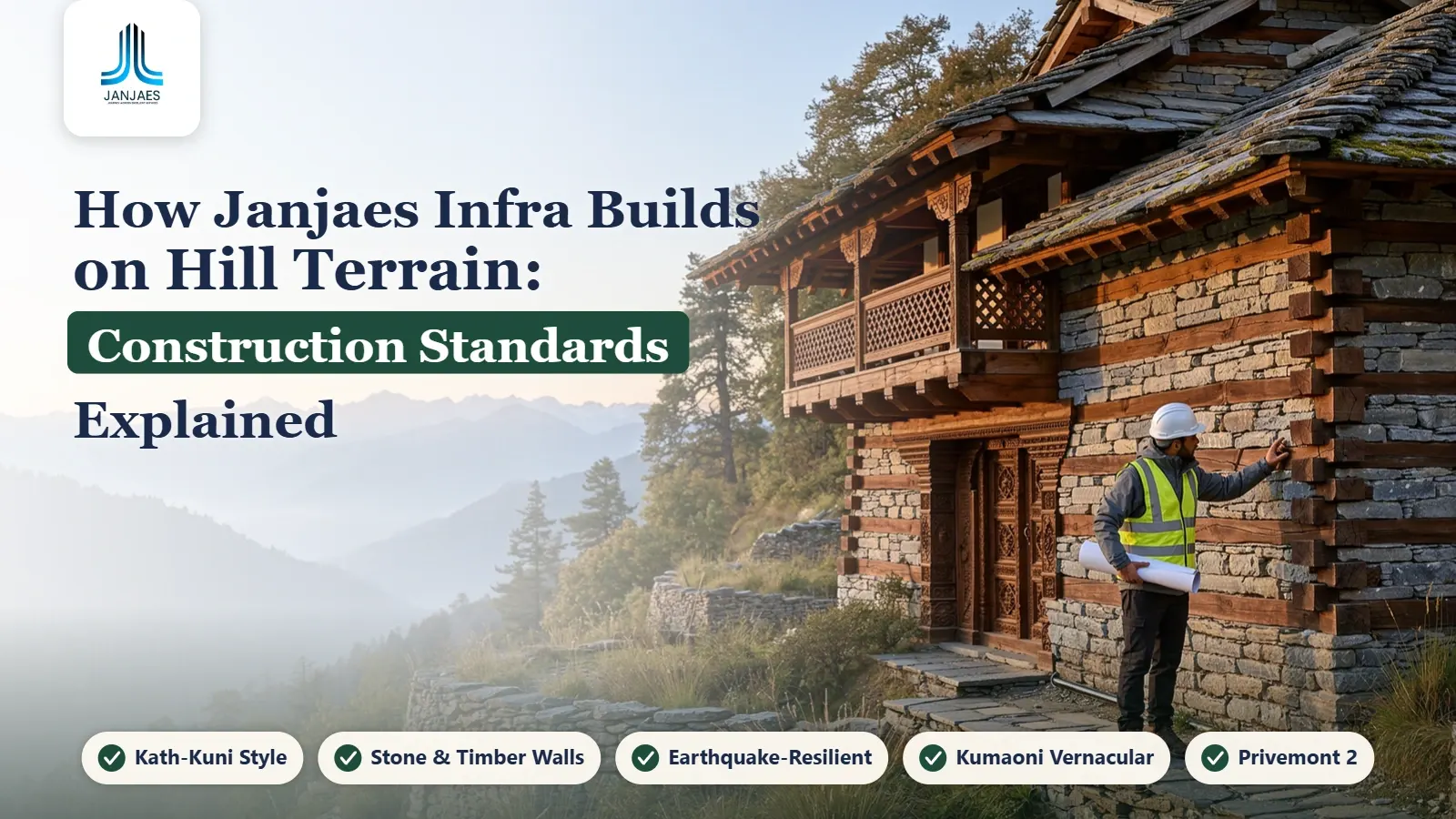
At Janjaes Infra, we choose Kumaoni vernacular construction styles across Privemont villas in Nainital, Uttarakhand. Construction standards are so high that we give serious attention to carefully picking the right building style for our villas. And at Privemont 2 near Jim Corbett, Uttarakhand, two of our villas feature the traditional Kath-Kuni style of architecture.
But what exactly is Kath-Kuni architecture? And why is it relevant to building homes in the hills?
What Is Kath-Kuni Architecture?
Kath-Kuni architecture is an old Himalayan way of building walls with alternating layers of wood and stone. The name gives it away. Kath comes from the Sanskrit word for wood, and kuni comes from kona, meaning corner, as the Sahapedia note on Himalayan vernacular building explains.
Picture a wall built like a sandwich: stone, then long wooden beams, then stone again. At every corner, the beams from two walls lock into each other. Traditionally, no cement is used. And on top, a heavy slate roof presses the structure down and holds it steady.
The style is best known from Himachal Pradesh, where centuries-old examples still stand.
Why Does Kath-Kuni Architecture Suit Hill Terrain?
Because the Himalaya moves. Uttarakhand still remembers the 1991 Uttarkashi and 1999 Chamoli earthquakes, and a rigid wall can crack when the ground shakes. A Kath-Kuni wall behaves differently.
- It bends a little. The timber layers let the wall flex during a tremor.
- The beams hold the stone together. Engineers compare these wooden bands to the seismic bands used in modern masonry, as the World Housing Encyclopedia notes.
- Thick stone walls hold warmth. So rooms stay comfortable through cold hill nights.
- The materials are local. Stone, slate and timber come from the region itself.
In short, it's a style born in the mountains, for the mountains.
Does Uttarakhand Have Its Own Version of This Style?
Yes. In the Rajgarhi area of Uttarkashi district, there's a closely related tradition called Koti Banal architecture. It uses the same idea of thick wooden logs laid inside stone walls.
Its strength isn't just a story. During the 1991 Uttarkashi earthquake, newer buildings collapsed while these old timber-and-stone houses stayed standing, according to the World Housing Encyclopedia report. So the logic of Kath-Kuni architecture is nothing new to Uttarakhand. The state has been building this way for centuries.
What Makes Kumaoni Vernacular Architecture Different?
Kumaon has its own building language. As the Kumaon Mandal Vikas Nigam describes it, the old houses of Kumaon have stone walls, slate roofs and courtyards paved with grey stone, called patangan. Their main doorways, known as kholi, carry carved figures of Ganesha and other deities.
Villages here also have the bakhli, a row of connected homes that share one front yard. The idea behind these homes is simple: build with what the hills give you.
How Does Janjaes Infra Use These Styles at Privemont?
This is where tradition meets a modern second home. Janjaes Infra follows Kumaoni vernacular styles so that our villas fit the land and climate around them.
At Privemont 2, we've gone a step further. Two of the villas there feature the Kath-Kuni style of architecture, with its signature look of wood and stone in layers. You get the character of a Himalayan heritage home along with the comfort of a fully furnished villa. You can see our other projects on the Uttarakhand projects page.
What Should You Ask Before Buying a Hill Home?
Whoever you buy from, ask these questions:
- Which construction style is the villa built in, and why does it suit this site?
- How was the slope handled during construction?
- Which materials were used for the walls and the roof?
- How should the timber and stone be looked after over the years?
That last point matters more than buyers expect. Our guide on villa maintenance costs in Jim Corbett explains what upkeep looks like for a hill home.
Frequently asked questions
What is Kath-Kuni architecture?+
It's a Himalayan building method where walls are made of alternating stone and wood layers, locked together at the corners.
Is Kath-Kuni architecture earthquake resistant?+
The timber layers let the walls flex during tremors, and old Kath-Kuni and Koti Banal buildings have survived earthquakes for generations.
Where did the Kath-Kuni style come from?+
It's best known from Himachal Pradesh. Uttarakhand has a closely related style called Koti Banal, found in Uttarkashi district.
What is Kumaoni vernacular architecture?+
It's the traditional building style of Kumaon, with stone walls, slate roofs, stone courtyards and carved wooden doorways called kholi.
Which Janjaes Infra project has Kath-Kuni style villas?+
Privemont 2. Two of the villas there feature the Kath-Kuni style of architecture.